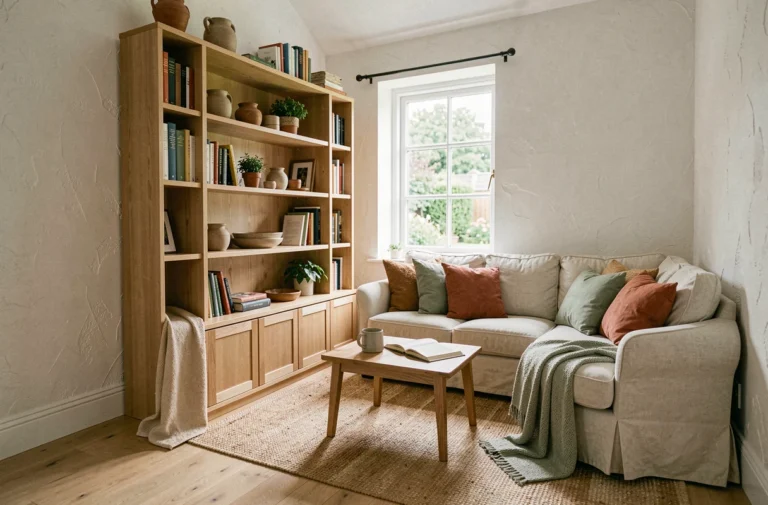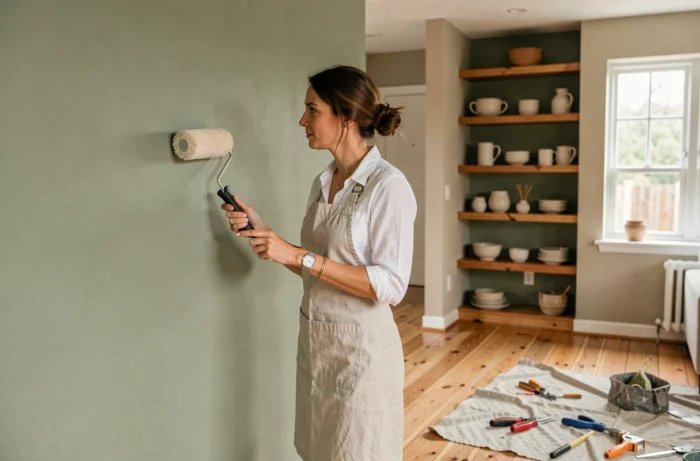
Arranging and decorating a home involves making choices among dozens of product categories, from lighting to flooring, including storage furniture. Each choice impacts a budget, daily use, and sometimes a regulatory constraint. This article compares the main home equipment categories based on their actual impact on comfort and indoor air quality, two criteria rarely considered in traditional decorating guides.
Indoor air quality and home equipment: an underestimated criterion
Before discussing aesthetics, one parameter should guide every purchase of furniture or decorative accessories: the emissions of volatile organic compounds. Particle board furniture, paints, scented candles, and air fresheners are among the main sources of indoor pollution, according to Daily Geek Show (September 2026).
The practical recommendations are clear: eliminate sources of pollution rather than buying an air purifier. Systematically ventilating after installing new furniture, keeping ventilation grilles clear, and favoring low-emission materials are the most effective actions.
This observation changes the usual perspective. A solid wood or metal piece of furniture, even if more expensive, reduces exposure to volatile compounds compared to a low-quality particle board piece. To compare the equipment available on Perspective Maison, this material criterion deserves to be checked before style or color.
Comparison of equipment categories by room: impact on comfort and technical constraints
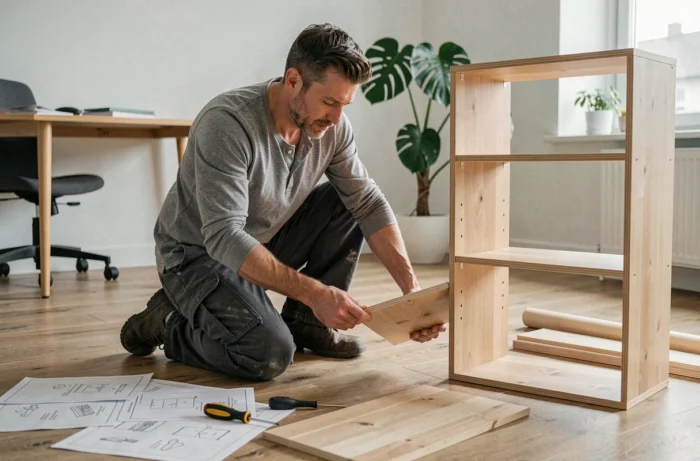
Not all furnishing categories have the same weight on daily comfort or the same installation requirements. The table below summarizes the key categories for the living room, bedroom, kitchen, and bathroom.
| Room | Priority Equipment | Technical Constraint | Impact on Comfort |
|---|---|---|---|
| Living Room | Lighting (pendant, floor lamp) | NF C 15-100 standard if electrical renovation | High (ambiance, visual fatigue) |
| Living Room | Sofa / main seating | No specific regulation | High (prolonged daily use) |
| Bedroom | Bedding and headboard | VOC emissions if particle board | Very high (sleep quality) |
| Kitchen | Modular storage | None (except hood: regulated extraction) | Medium to high (daily ergonomics) |
| Bathroom | Lighting and mirror | Mandatory protection index (wet areas, NF C 15-100) | High (safety + visual comfort) |
The “technical constraint” column reveals a notable gap between rooms. The bathroom imposes specific protection indices for any lighting, which most decorating guides overlook. A light fixture chosen solely for its appearance may turn out to be non-compliant in this room.
Lighting: the NF C 15-100 standard changes the game
In the context of electrical renovation, the NF C 15-100 standard regulates lighting installations and protection levels in wet rooms. A recessed spotlight in a bathroom false ceiling, for example, must meet a protection index appropriate to its distance from water points.
This constraint does not concern a simple light bulb change, but it applies as soon as the electrical circuit is modified. Checking the protection index before purchasing a decorative light fixture for a wet room avoids costly replacements later on.
Interior decoration: colors, textiles, and natural materials
Textile accessories (cushions, throws, rugs) and wall decoration elements constitute the second investment category after furniture. Their selection benefits from following a layering logic rather than a one-off purchase.
- The rug structures the space by visually delineating living areas while reducing noise disturbances in apartments with hard floors
- Seating textiles (cushions, covers) allow for changing the dominant colors of a room without replacing furniture, a useful lever when trends evolve
- Natural materials (wicker, linen, ceramics) reduce exposure to volatile compounds compared to treated synthetic materials
On the other hand, accumulating decorative accessories without a coherent palette produces the opposite effect of what is sought. A maximum of three colors per room is sufficient to maintain visual harmony, including textiles and walls.
Storage and layout of limited spaces
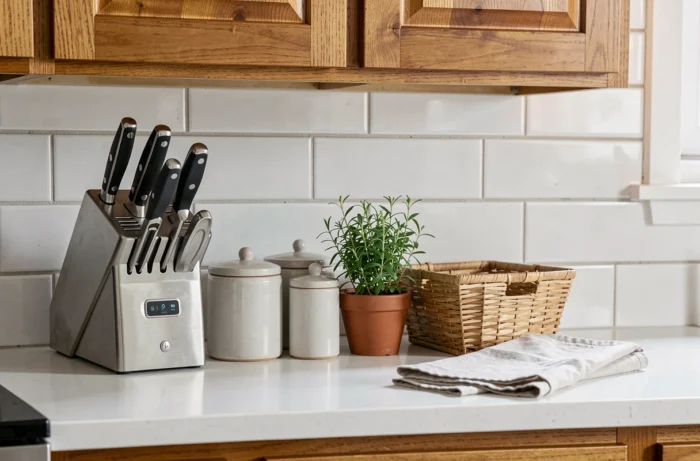
In homes where space is limited, storage becomes a key piece of equipment. Modular solutions (open shelves, multifunctional furniture, attic dressing kits) free up floor space and reduce visual clutter.
A well-sized storage unit often makes the purchase of additional decorative accessories unnecessary: an organized interior appears larger and neater than a decorated but cluttered space.
Warranty of equipment installed in an existing building: what the law really covers
A point rarely addressed in decorating guides concerns the warranty applicable to equipment added to an existing building. According to a jurisprudential evolution reported by France Épargne, equipment installed in an existing structure may fall under common law contractual liability, and not under the ten-year or two-year warranties, when it does not constitute a work itself.
In practical terms, having a glass roof, staircase, or integrated lighting system installed by a craftsman does not automatically guarantee ten-year coverage. Checking the contract and the type of warranty before starting work protects better than recourse after a loss.
- Always request a ten-year insurance certificate from the craftsman, even for interior renovation work
- Distinguish between detachable equipment (furniture, removable lighting) and works integrated into the structure (partitions, fixed electrical installations)
- Keep invoices and technical descriptions: they serve as proof in case of disputes over the nature of the work
This legal framework makes the choice between installing equipment oneself and hiring a professional less straightforward than it seems. The cost of labor sometimes includes a protection that self-installation does not provide.