
The expression “going grocery shopping” does not refer to a competition or a trivial trip. Despite its apparent simplicity, it signifies a daily activity whose meaning has evolved over the centuries, linked to economic and social transformations.
The common use of this phrase reveals a linguistic history marked by changes in practices and mindsets. Behind these words lies an unexpected trajectory, shaped by the evolution of lifestyles and distribution networks.
A Brief History of the Expression “Going Grocery Shopping”: From Origins to Today
Tracing back to the source of “going grocery shopping” is to dive into the beating heart of past commercial life. As early as the 19th century, the phrase referred to the very concrete action of going to urban markets, basket in hand, to buy what was needed for daily life: bread, cheese, vegetables from the greengrocer, local poultry. These markets, true crossroads of exchange and encounters, embodied the spirit of the city and the energy of the neighborhood.
But “grocery shopping” did not stop there. Decades have shaken up habits: industrialization and then urbanization saw the rise of local shops. Then, in the 1960s, the arrival of supermarkets changed the game. Gone was the obligatory stop at the cheesemonger’s, replaced by impersonal aisles, shopping carts, and neon lights. Yet, the expression has survived these changes without losing its place in everyday language. It has adapted, now encompassing both open-air markets and modern big-name retailers.
Over time, the meaning of “grocery shopping” has broadened. Today, it is no longer just about filling the fridge. It also includes buying school supplies and appliances. Why going grocery shopping has become a shared habit, a necessary routine, almost an automatism. Behind this routine lies a common story, a lexical heritage that continues to be passed down from generation to generation, shaping collective life.
Why Is This Expression So Embedded in Our Daily Lives?
To say “going grocery shopping” is to use a universal expression, shared without distinction of age or background. From children to grandparents, everyone relates to it. It slips into conversation, is casually mentioned before heading out, and is heard from both the young and the old. It is a reference point, a gesture that punctuates the week, a sign that routine continues effortlessly.
But behind these seemingly innocuous words lies a whole family mechanism. Grocery shopping is about anticipating needs, organizing the household, and distributing roles. It can be the Saturday chore, the Wednesday outing, or the last-minute run. Regardless of the form, the expression adapts: it suits the student filling their basket as well as the large family planning meals, the retiree choosing products at the market, or the busy young professional in the supermarket aisles.
To better grasp the significance of this ritual, here are some aspects that illustrate its omnipresence:
- Universal Use: the expression circulates across all layers of society, without social or cultural barriers.
- Cultural Transmission: it is learned from childhood, passed down from generation to generation, naturally.
- Daily Organization: it structures time management, priorities, and household balance.
This verbal reflex, as frequent as it is necessary, reflects the central place of consumption patterns in French life. Every household recognizes it, and each week revolves around these moments, whether planned or improvised. “Going grocery shopping” stands as a faithful reflection of everyday practices, the connections woven around the most basic needs.
Concrete Examples to Better Understand and Share the Expression Across Generations
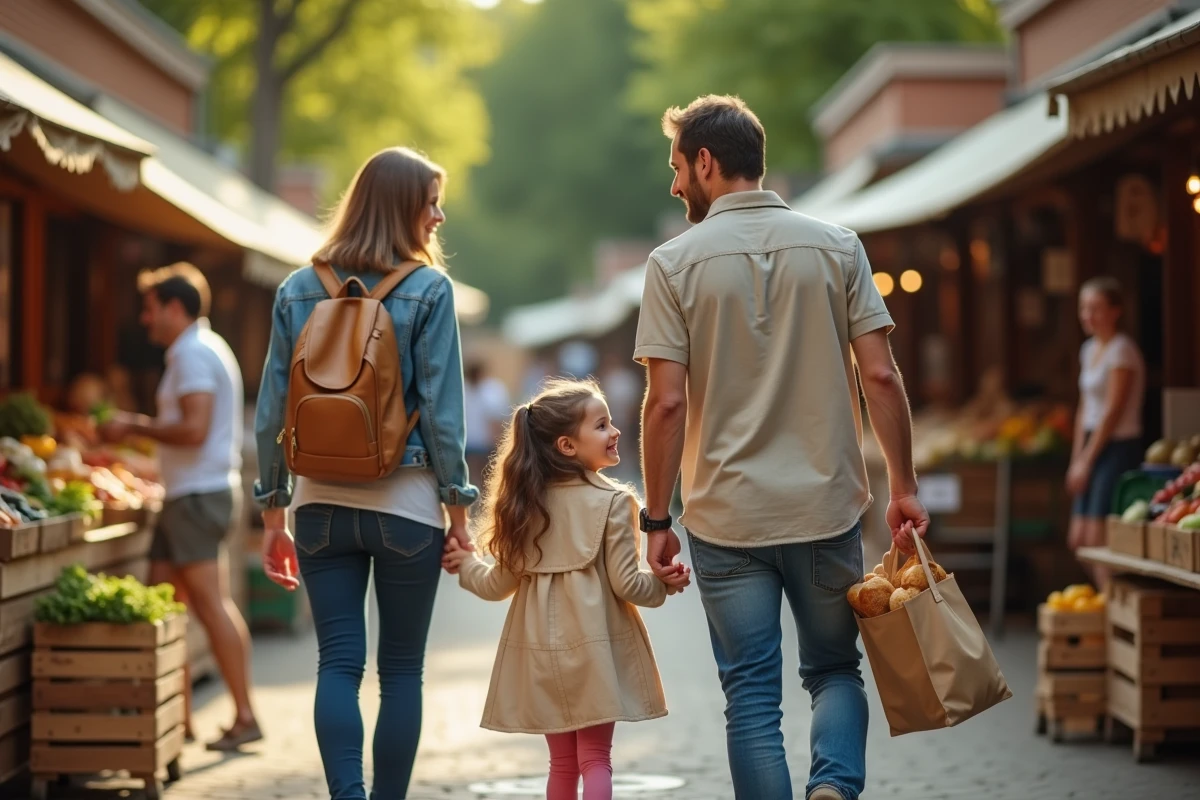
The power of “going grocery shopping” is measured in lived reality. Imagine a parent inviting their child to accompany them, basket in hand. This small ritual, seemingly trivial, structures the household’s day and creates memories. The child discovers the market, observes the stalls, learns to choose and compare. The expression then becomes synonymous with sharing, learning, and discovering life in society.
The older generation recounts how shopping in their youth was synonymous with encounters: chatty fruit vendors, still-warm bread, animated discussions at the stand’s corner. For them, the expression evokes a time when every purchase was made through dialogue, exchange, and closeness. This oral transmission gives the phrase depth, a different hue depending on family stories.
Here’s how the meaning of the expression evolves according to age and context:
- Among younger generations, “grocery shopping” includes both trips to the supermarket and online orders. The vocabulary remains, but practices change.
- In families, the phrase accompanies the passage of time: from traditional markets to automated aisles, it follows the transformations of purchasing methods without losing its collective grounding.
This collective dimension makes “grocery shopping” much more than just an act of buying. It is a reference point, a bridge between generations, a living witness to societal evolutions. The expression, through repetition, ends up telling the story of each neighborhood, each household, each era.
Tomorrow, the expression will continue to accompany daily gestures, testifying to an invisible link between the past and the future, between the local market and online shopping. Language, indeed, has not finished grocery shopping.