
Snail farming remains one of the few agricultural sectors where legislation varies dramatically from one territory to another, sometimes forcing one to maneuver against the current. In the early days, the mortality rate can approach half of the herd, a classic trap of the beginnings, between poorly controlled humidity and unstable feeding. However, contrary to popular belief, Helix aspersa, the star of the French industry, withstands climate whims much better than one might think.
Success is not a matter of chance. Every inaccuracy, every oversight, eventually comes at a cost: a poor start can set you back many months, sometimes the entirety of a first season.
Essential basics for understanding snail farming
In heliciculture, nothing is secondary. Both demanding and almost thankless, this world rarely forgives improvisation. The animal, often reduced to its shell, requires a precise living environment: effective shelters, measured humidity, constant temperatures.
It all starts with the life cycle, from egg laying to growth, where micro-variations in the environment weigh heavily. Between 15 and 20°C, air that is sufficiently humid but never stifling: this is the range that makes a difference. Forgetting about soil quality or shelter means condemning your snails to survival rates that dwindle to nothing.
No growth without a good dose of calcium. It is the foundation for shaping the shell, a true barometer of the gastropod’s health. Eggshell flour, mineral supplements, and a variety of plants enhance the entire dynamics of the park.
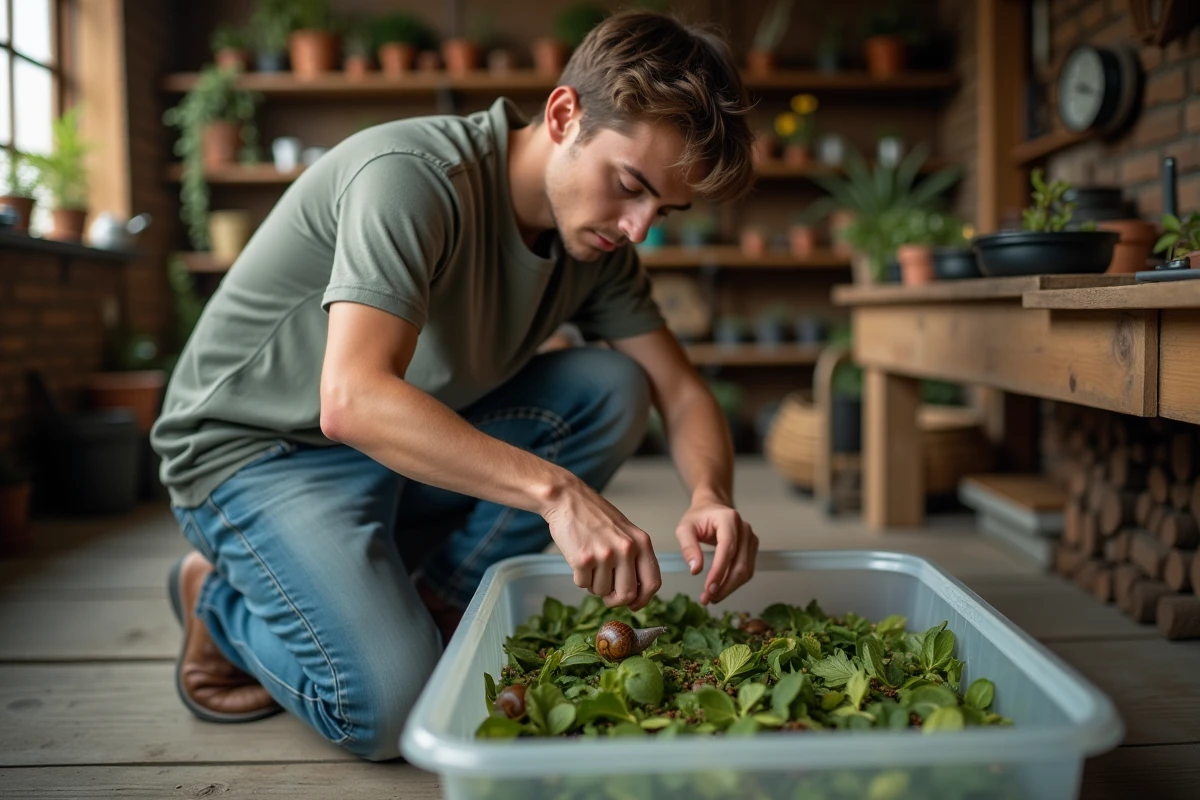
On the feeding side, monotony kills slowly. Fresh leaves, ground wheat flour, and crushed dry beans provide complete menus, avoiding fragility or breakage.
It is impossible to escape administrative procedures: in France, setting up a simple park sometimes requires a declaration at the town hall. To avoid getting tangled up, the Excargot net site concentrates practical advice and clear answers to everyday questions, from humidity control to the delicacy of eggs.
On the ground, you need to monitor a few decisive points:
- Stable and moderately cool temperature
- Rich and varied diet, without neglecting calcium intake
- Soil layout, shelters against heat and predators, good drainage
Commercial or educational farming: what are the differences and which project to choose?
Two paths are available to those who want to start snail farming: production-focused and educational approaches. Each comes with its own set of requirements and satisfactions.
For commercial aims, everything must rhyme with organization. Controlled density, precise species selection, absolute cleanliness, adherence to procedures—this involves traceability, hygiene, and strict respect for animal welfare. Material investments are not trivial, and management is experienced with precision, from purchase to sale.
On the educational side, other priorities emerge: offering contact with nature, instilling a taste for observation, and introducing the various stages of the life cycle. At school, at home, or in an association, installations and handling are simplified, favoring exchange and discovery over quantity or yield.
Here are the main nuances between the two approaches:
- Commercial: yield, investment, regulated standards
- Educational: pedagogy, discovery, simplified installation
The choice is never neutral. It shapes your activities, alters your routine, structures your relationship with the animal, and ultimately, molds the project over time. Stay clear-eyed about the time to dedicate, the space you have, and the resources you allocate to this project.
What practical advice for successfully starting your first snail farm without stress?
Starting a snail farm means learning to blend precision and patience. First and foremost, identify a discreet and calm location, exposed to partial shade, away from prevailing winds, and with fine soil rich in humus. Water should be present, but in moderation; avoid persistent puddles after rain, as harmful as overly dry soils.
Continuously monitor the temperature: a range of 18 to 20°C promotes growth. If the days become stifling or the air dries out, it is better to water more regularly or even install a light misting system. Maintaining a minimum level of humidity is the best guarantee of consistent growth.
Feeding and growth
Here are some precautions to enhance your snails’ diet:
- Focus on a variety of plants like lettuce, grated carrots, or zucchini, complemented by energy sources such as wheat flour or ground dry beans
- Strengthen the shell with easy additions: powdered eggshells, salt licks, or minerals designed for farming
- Change the water and food daily, and immediately remove any leftovers as soon as they start to degrade
Strictly adhere to biological rhythms: monitor laying, locate eggs hidden in the soil, and avoid overcrowding, which can lead to tensions, diseases, and accidents in the park.
A often overlooked point: stay attentive to hygiene. Organic debris, droppings, old food—everything must be removed as soon as it accumulates. This daily rigor prevents many disappointments and supports the development of snails, from the youngest to the oldest.
Behind this apparent slowness, snail farming challenges the notion of time: every modest gesture silently conditions the success of the colony. Once tamed, one discovers a world where patience and observation become true riches.