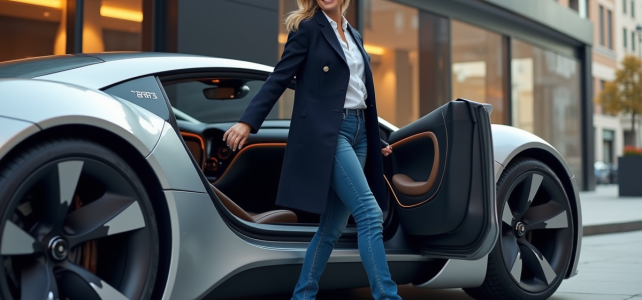
The hybridization of segments is becoming a major commercial strategy for traditional brands, to the point of blurring the boundaries between SUVs, sedans, and city cars. Some innovations disrupt the usual model renewal cycles, challenging the very notion of range.
Historic manufacturers are injecting materials from unexpected backgrounds into their ranges, relying on technologies from other industries, while emerging players impose their own tempo, often off the beaten path. The mergers between competing groups are multiplying, accelerating the transformation of a sector long known for its caution and stability.
What trends are redefining the automotive market today?
The automotive market is undergoing a transformation that it no longer controls. Electric mobility has emerged as the driving force behind this revolution. It changes the rules of the game, disrupts production chains, and reshuffles the cards among manufacturers. To stay in the race, automakers are investing heavily in research, technology, and the development of electric cars that push the limits of performance each year.
Auto shows testify to this: modularity, embedded intelligence, and connectivity are no longer promises. They are the new standards. We see hybrid models alongside autonomous vehicles, concepts that erase the distinction between city cars and utility vehicles. The arrival of the Dacia Towny, analyzed straightforwardly in the article “Dacia Towny: automotive revolution or mere chimera? – Auto Tendance,” is proof of this. For some, this model embodies a break. For others, it is a challenge to conventions.
Several major trends are emerging on this turbulent scene:
- The massive electrification of ranges, supported by European regulatory pressure.
- The multiplication of modular platforms, to gain efficiency and flexibility.
- The increasing integration of embedded software, sometimes with partners from the tech world like Microsoft.
The European automotive landscape is being redrawn. Historic brands are betting on unprecedented architectures. In France, yesterday’s leadership must now face new challengers and the push from Chinese manufacturers. Electrification is becoming essential: competitiveness criteria are changing, and thermal models are aging rapidly. The codes of the automotive world are being reinvented, and each technological advance prepares the ground for the next generation of vehicles.
Luxury and design: when exception shapes the future of the automobile
The automobile is becoming a laboratory where luxury and design dictate new uses. In Munich, the latest shows unveil models where style is no longer limited to the exterior. The interior transforms into a manifesto of comfort, innovation, and embedded technologies. High-end cars no longer just showcase their performance: they embody craftsmanship, where aesthetic research meets technical avant-garde.
France claims its heritage and tries to compete with the giants of the segment. Electric SUVs adopt sharp lines, distinctive lighting signatures, and carefully chosen materials, embodying an idea of automotive luxury. The total cost of ownership takes on a new dimension: buyers are becoming more aware of their environmental impact, integrating sustainability into the sought-after prestige.
This quest for excellence is reflected in several strong trends:
- Use of recycled materials, customized finishes according to the client
- Advanced personalization, down to the smallest detail
- Immersive technologies, designed for onboard well-being
Some DS Automobiles models embody this move upmarket. Electric SUVs are competing with innovations to attract a clientele that wants it all: image, technology, distinction. Consumption modes are evolving, forcing manufacturers to rethink the boundary between refinement and accessibility. Design is becoming a signature, with every element weighed, every choice guided by the idea of exception. The automobile, more than ever, cultivates the art of surprising and daring.