
GSM jammers, available online for a few dozen euros, pose a documented threat to home alarm systems. A report aired on TF1 on October 30, 2023, highlighted the vulnerability of several consumer brands, including Verisure. Since then, manufacturers have updated their devices, and some technical solutions stand out for their ability to maintain protection even in the event of jamming attempts.
This ranking is based on three criteria: the reliability of jamming detection, the redundancy of communication channels, and the ability to trigger an alert despite a radio attack.
Read also : How to Protect Your Home with an Effective Verisure Jammer Alarm
Several approaches exist to secure an alarm against this type of attack. Understanding the anti-jamming solutions for Verisure alarms allows for a better assessment of the available options and the selection of an appropriate level of protection for one’s home.
1. Dual GSM and IP transmission with automatic switchover
Related reading : How to Enhance Your Comfort with Innovative Housing Solutions Services
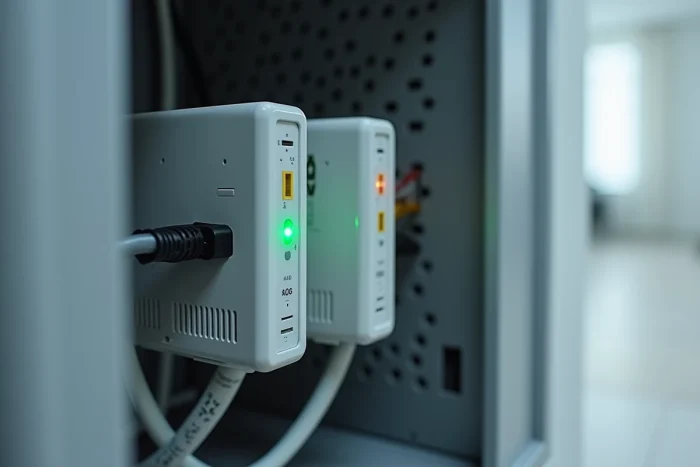
The most effective countermeasure against a GSM jammer remains the redundancy of communication channels. Recent Verisure and Sector Alarm panels have integrated a dual GSM and IP transmission with automatic switchover since late 2024. If the cellular channel is neutralized by a jammer, the signal immediately transmits via the wired internet or 4G connection.
The jammers sold online are mostly “single-band” devices that only target the GSM channel. They do not block IP transmission, making this dual channel particularly relevant. Continuous supervision of the backup link allows the panel to detect any abnormal cut and alert the monitoring center even before an intrusion is attempted.
The limitation of this solution lies in its dependence on the home’s internet network. In the event of a simultaneous cut of the box and GSM jamming, the panel must be able to switch to a third channel (proprietary radio network or embedded 4G) to maintain communication.
2. NFA2P Grade 2 or 3 certification with integrated jamming detection
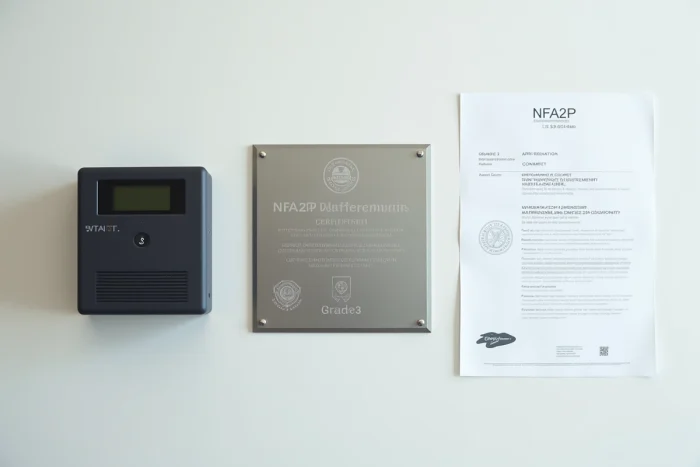
The NFA2P certification, issued by the CNPP, imposes specific technical requirements on resistance to sabotage attempts, including radio jamming. Certified systems NFA2P Grade 2 and Grade 3 undergo laboratory tests that verify their behavior in the face of a jammer attack.
Independent tests published in 2024 by the CNPP show that the most recent panels certified at these levels trigger either a jamming alert or switch to “critical fault” mode within a very short time as soon as radio jamming is detected. This behavior is absent in non-certified entry-level systems.
- Grade 2: suitable for homes with moderate risk, requires radio inhibition detection and an alert to the monitoring center
- Grade 3: designed for high-risk sites, demands enhanced resistance to physical and electronic attacks, with shorter reaction times
- Grade 1: does not cover scenarios of deliberate jamming, to be avoided if this threat is taken seriously
Checking the NFA2P grade of a system before purchase serves as a reliable filter to eliminate vulnerable alarms.
3. Verisure anti-burglary fog as a layer of physical deterrence

The anti-burglary fog offered by Verisure operates on a different level: instead of protecting the signal transmission, it makes burglary physically impossible to continue. Within seconds, a generator fills the room with an opaque and non-toxic fog that reduces visibility to just a few centimeters.
This device works independently of the GSM or IP connection. Even if a jammer temporarily neutralizes communication with the monitoring center, the fog activation is locally controlled by the panel. The burglar, deprived of visibility, cannot locate valuables or navigate within the home.
Field reports vary regarding the actual coverage of the fog in large volumes (rooms over 40 m² or with very high ceilings). The positioning of the generator during installation directly affects the device’s effectiveness. A poorly calibrated installation may leave partially clear areas.
4. My Verisure mobile app with real-time alerts

The My Verisure app sends instant notifications in case of anomaly detection, including jamming attempts. The user receives an alert on their smartphone as soon as the panel identifies a suspicious loss of signal on any of its communication channels.
This layer of monitoring allows the owner to react quickly, either by contacting law enforcement or visually checking the situation via the system’s connected cameras. The app centralizes the status of all sensors and displays the event history, helping to distinguish a real jamming from a simple network disruption.
The dependence on the smartphone remains a point of caution. If the phone is on silent mode, out of network, or low on battery, the alert may go unnoticed. The monitoring center remains the primary safety net in this scenario.
5. ATN backup network to maintain the link in case of total cut
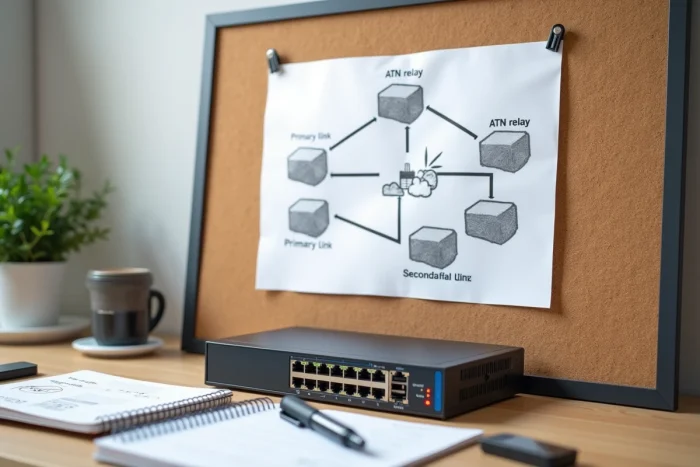
The ATN network (proprietary radio network) constitutes a third communication channel independent of GSM and IP. Verisure uses it as the ultimate backup channel: if the first two channels are simultaneously neutralized, the panel attempts to contact the monitoring center via this dedicated network.
This network operates on frequencies distinct from those targeted by consumer jammers. A standard GSM jammer has no effect on this link, forcing an attacker to have significantly more sophisticated and expensive equipment to neutralize all channels.
- The ATN network covers part of the territory, but its availability varies by geographical area
- Its activation depends on the subscription level taken with Verisure
- It does not replace the dual GSM/IP channel but complements it as a last resort
The combination of these five solutions, from dual transmission to the ATN network, forms a layered security system. No single measure guarantees total protection against jamming, but their overlap significantly reduces the operational window for an equipped burglar. Choosing the right system starts with verifying the NFA2P certification and the number of active communication channels on the panel installed in your home.