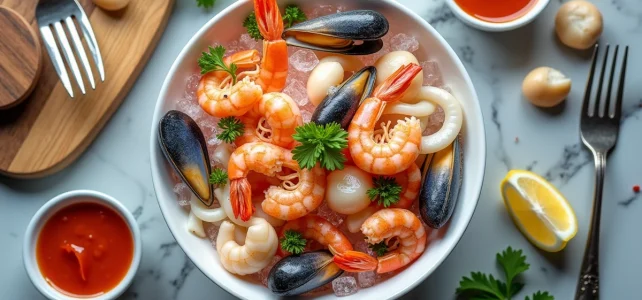
The frozen seafood cocktail can be found in most French freezers, but the result on the plate often ranges between a rubbery texture and a bland taste. The problem rarely lies with the product itself. It stems from three steps that most online recipes overlook: thawing, managing the released water, and the precise moment when the seafood joins the pan or sauce.
Thawing the seafood cocktail: what happens before cooking
The first mistake is pouring the bag directly into the pan or pot. The frozen seafood then releases a large amount of water, resulting in a poaching effect rather than a sear. The texture suffers, and the flavors dilute into a cloudy juice instead of concentrating.
The French Agency for Food, Environmental and Occupational Health & Safety recommends a slow thawing in the refrigerator rather than at room temperature. This point is not just a health precaution: it also limits the microbiological risk associated with breaking the cold chain, particularly sensitive for shrimp and mussels.
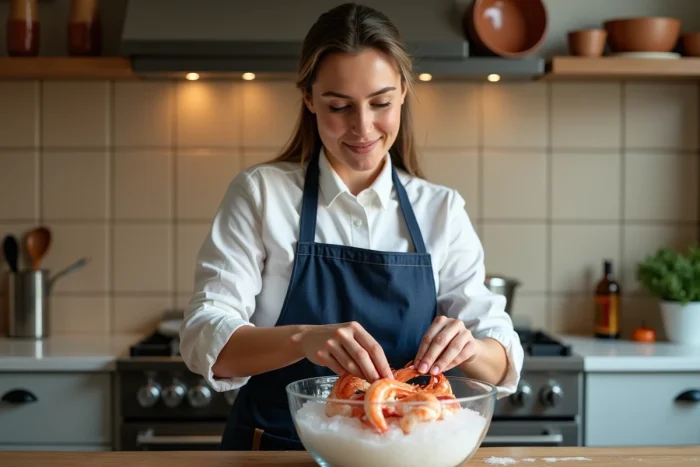
To prepare a frozen seafood cocktail under good conditions, allow for a full night in the refrigerator in a colander placed over a bowl. The water drains, and the flesh retains its structure. The next day, pat the pieces dry with paper towels before any cooking.
Cooking frozen seafood in a pan: high heat and short time
The frozen seafood cocktail contains pieces of very different sizes and textures. Shrimp, squid, mussels, and pieces of octopus do not react the same way to heat. Cooking everything together at the same time results in a mix where some elements are perfectly cooked while others are already dry.
Separate elements by type
Before starting to cook, sort the contents of the bag. Squid and octopus can withstand longer cooking times better. Shrimp and mussels, on the other hand, harden quickly. Start by searing the firmer pieces in a very hot pan with a drizzle of oil, then add the delicate elements at the end of cooking.
- Squid rings and pieces of octopus go in first, over high heat, for a few minutes until lightly colored.
- Shrimp join the pan next and cook very quickly: they are ready as soon as they turn opaque and pink.
- Mussels, if precooked (which is common in frozen cocktails), only require a quick reheating of a few seconds at the end of cooking.
This sequential approach requires a bit more attention, but each element retains its own texture instead of forming a uniform and mushy mass.
The trap of residual water in the pan
Even after proper thawing, seafood still releases some liquid during cooking. If the pan is not hot enough or if you add too much at once, the temperature drops and the pieces stew instead of searing. Work in small batches over high heat. An overcrowded pan turns searing into poaching, and the result is immediately noticeable.
Seasoning and sauce for frozen seafood
The frozen cocktail has undergone industrial glazing (a thin layer of protective ice) that dilutes the flavors. The seasoning must compensate for this deficit without masking the marine taste. Two approaches work well, depending on the intended dish.
Quick tomato sauce base
Sauté garlic and chopped onion in olive oil. Add crushed tomatoes, a bit of white wine, and let reduce for a few minutes. The seared seafood is added to this sauce at the very end, just long enough to coat them. The white wine deglazes the cooking juices and adds acidity that enhances the flesh of the shellfish.
Risotto or pilaf rice version
For a complete dish, sauté the rice in butter, then gradually moisten with fish stock (or vegetable stock if necessary). The seafood joins the rice at the very end of cooking, off the heat, allowing the residual heat to suffice. Seafood risotto can easily turn rubbery if shrimp and mussels cook too long in the broth.
Traceability of frozen cocktails: read the label before buying
The contents of frozen seafood cocktails vary significantly from brand to brand. Some mixes contain a majority of squid (less expensive) and very few shrimp. Others include pieces of surimi, which are not seafood in the strict sense.
European Regulation No. 1379/2013 requires labeling of the origin of fishery and aquaculture products. The capture area and production method must be indicated on the packaging. In practice, this information often remains discreet, printed in small on the flap of the bag.
Check the ingredient list in descending order of weight. A cocktail where shrimp are listed first will offer a richer taste than a mix dominated by squid. The presence of additives like polyphosphates (used to retain water in the flesh) is an indicator of lower quality: polyphosphates inflate the weight of the product without adding flavor.
The choice of the bag determines the final result as much as the cooking technique. A well-composed frozen seafood cocktail, properly thawed and cooked in stages, yields a dish that can stand up to fresh seafood, for a fraction of the price and preparation time.