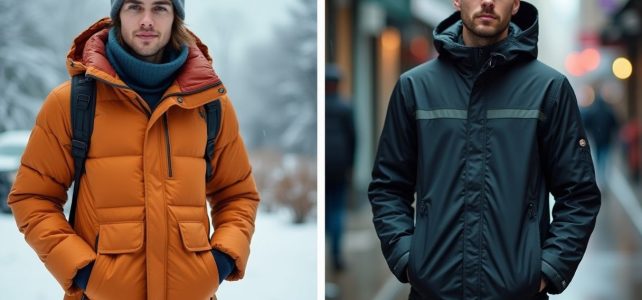
As soon as the temperatures start to drop and winter approaches rapidly, the search for the ideal jacket to face the cold becomes a priority. In this quest, the down jacket often stands out as the obvious choice for its insulating properties and lightness. However, a dilemma persists: should one opt for a natural down jacket or a synthetic jacket? Each of these options presents distinct advantages and disadvantages. The choice between comfort, price, durability, and environmental sensitivities can become complex.
Warmth: a matter of feathers or fibers
At the heart of the question lies the ability of the jacket to retain heat. Natural down, generally sourced from geese or ducks, has long been praised for its exceptional thermal properties.
Natural down is highly valued for its ability to trap air, thus creating an effective thermal barrier. Its lightness and compressibility make it a popular choice for those seeking optimal warmth without the weight.
On the other hand, synthetic insulating materials, often made from polyester fibers, have been specifically designed to mimic the properties of natural down. These fibers provide good thermal insulation, even though they are slightly heavier.
Ultimately, if the priority is to stay warm in extreme conditions, natural down retains a slight advantage. However, for more temperate climates or everyday use, synthetic materials can provide sufficient warmth without sacrificing comfort.
Moisture resistance: come rain or shine
Weather conditions can be unpredictable, and it is essential that your jacket can withstand the challenges of humidity. Here, the differences between the two types of insulation become particularly significant.
- Natural down: while highly insulating, it loses its effectiveness when wet. Once damp, it takes time to dry, compromising its ability to trap heat.
- Synthetic: synthetic fibers, on the other hand, retain their insulating capacity even when exposed to moisture. They dry quickly and do not lose their volume, making them a wise choice for humid environments.
The choice between the two then depends on the nature of the planned activities. For a mountain hike where rain is frequent, a synthetic fiber jacket would be more suitable.
Durability and environmental impact: an ethical choice
In light of growing concerns about the environment, the choice of materials and their ecological impact are becoming essential criteria for consumers.
- Natural down comes from animals, which can raise ethical concerns regarding animal welfare. However, when properly maintained, it can last a very long time, thereby reducing its carbon footprint in the long run.
- Synthetic materials are often derived from petroleum products, which can have a significant ecological impact. Nevertheless, some companies are innovating by using recycled materials, thus decreasing their environmental impact.
Ultimately, the choice may come down to personal preferences and ethical values. Consumers may prioritize purchasing women’s down jackets made responsibly, such as women’s down jackets, for a more ethical choice.
Comfort and aesthetics: style and functionality
Beyond functionality, the aesthetic aspect and comfort of the jacket are factors that strongly influence consumer choice.
Natural down jackets often have a puffier appearance and can give a voluptuous silhouette. They are light and pleasant to wear, offering an unmatched feeling of comfort.
Synthetic options often allow for a more fitted and modern design, as they do not require as much volume to provide adequate insulation. This enables designers to create more varied and fashionable cuts.
The choice between natural and synthetic down can also be influenced by personal style and intended usage occasions. A jacket for casual outings may differ from one used for sports activities.
The choice between a natural down jacket and a synthetic jacket depends on many factors, ranging from personal preferences to practical and ethical considerations. Each type has its strengths and weaknesses, and an informed choice ensures that one stays warm, comfortable, and satisfied with their purchase for many winter seasons to come.