
One hundred and eighty-seven years. Hermès is older than the Paris metro, older than the Eiffel Tower, older than most of the monuments associated with the capital. Its birth dates back to a time when the carriage still ruled the cobblestones, and leather primarily adorned saddles and harnesses. Since then, Hermès has never allowed itself to be swept away by the rush of progress. Where the world was plunging into massive industrialization, the house remained faithful to the slow, precise, resolutely artisanal gesture. For each bag, there is a single artisan. No robots, no assembly line. A Kelly bag requires eighteen hours of pure concentration. Patience here, far from being a formula, serves as a compass. Obtaining a Birkin can take years, but that’s the price of an embraced rarity. The hides are sorted with extreme care, and only a few pass each year through the Hermès control barrier.
Hermès, a family name borne by audacity and loyalty
1837, Paris: Thierry Hermès launches a modest workshop for saddlers and harness makers, amidst the sounds of hooves and hand-tanned leather. From generation to generation, the heirs, from Charles-Émile to Axel Dumas via Jean-Louis Dumas, have continuously reinforced the legend of the house, established at 24 rue du Faubourg-Saint-Honoré. This address is not just a location: it symbolizes a heritage, an uninterrupted transmission of the taste for perfection, the concern for the right gesture, and exceptional craftsmanship.
See also : Iconic Characters of Japanese Animation: The Legacy of the Hokage
In the face of the perpetual race of progress, Hermès moves against the current. The descendants continually push the boundaries of creativity without renouncing what gives the house its soul: the human hand dominates the machine, patience supplants speed. This loyalty to tradition is not feigned; it is embodied day after day in every creation that leaves the workshops. To understand the uniqueness of this family adventure, nothing is better than retracing the history of the Hermès brand to grasp how each generation has consolidated the house around a myth that has become reality.
Hermès has managed to navigate through modernity with rare sobriety: novelty is mastered, whimsy appears in touches, but fleeting fashion remains at the door. As a result, the house today boasts an eleven-figure turnover, but continues to prioritize the true, the carefully crafted, far from flashy effects and commercial noise.
Related reading : Discover the benefits of snail farming and its surprising secrets
Kelly bags, silk squares: how Hermès icons assert themselves
The Kelly bag: a piece that, in itself, summarizes the nobility of a craft passed down and refined. Eighteen to twenty-five hours of craftsmanship to bring together precision, grace, and audacity: each Kelly bears the imprint of a unique artisan, from the first sketch to the final stitch. It is not just a bag; it is the synthesis of decades of know-how reinvented with each piece.
On its part, the Hermès carré embodies graphic elegance and the delicacy of the gesture. Born in Lyon in 1937, it traverses decades, adopting the colors of its time but without yielding to the superfluous. Worn by Jackie Kennedy or Catherine Deneuve, not to mention the contemporary creativity of Bali Barret, the carré remains true to its heritage: fine silk, hand-rolled hem, precise printing.
If these creations transcend time, it is thanks to solid principles that the house never compromises. Here they are clearly stated:
- Unchanging craftsmanship: in-depth training, meticulous gestures, refusal of mass production. Each object produced in limited series finds its true identity in the artisan’s hand.
- Innovation without rupture: the stylistic boldness marked by the contributions of Margiela, Gaultier, or Lemaire always respects a heritage.
It is impossible to mention Hermès icons without acknowledging the Birkin, born from an unexpected encounter between Jane Birkin and Jean-Louis Dumas. To acquire this bag, patience is the first quality required: the wait, sometimes long, is not an obstacle but the promise of a rare possession, desired, never banalized.
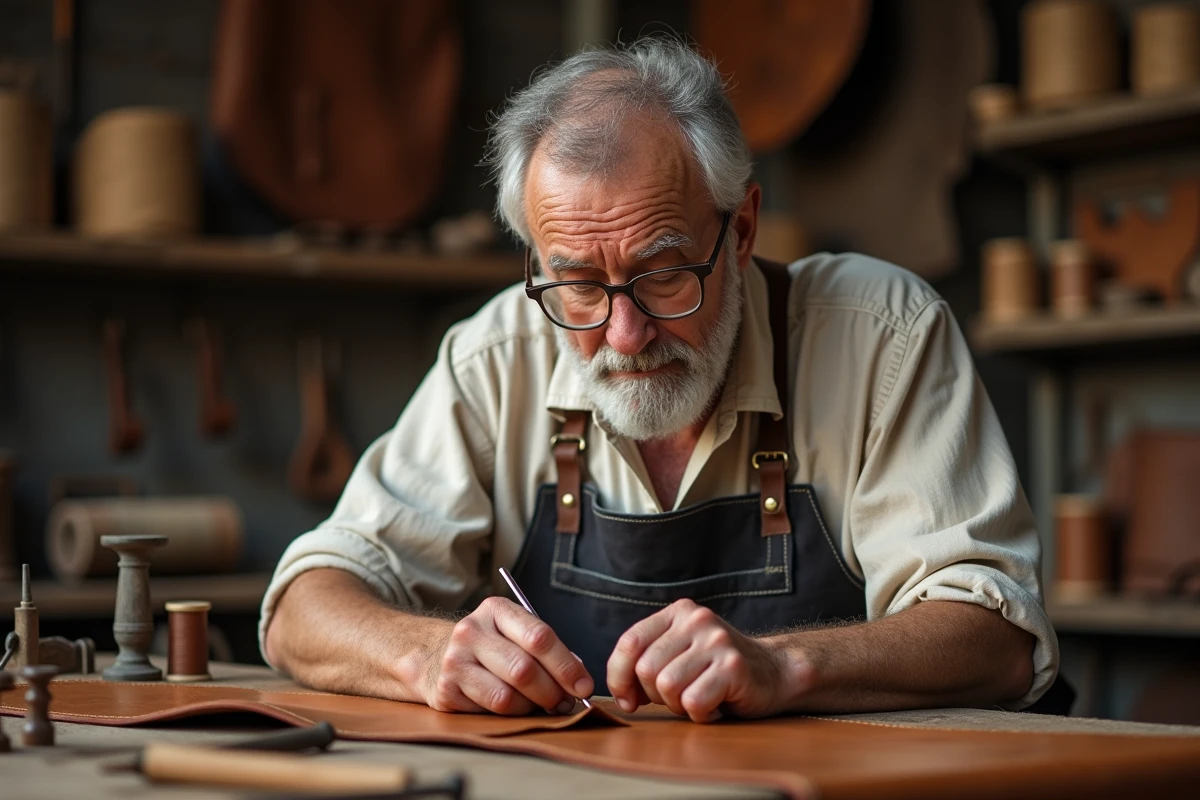
Preserving the nobility of each Hermès object: daily gestures for the initiated
Acquiring a Kelly or a Birkin requires ongoing care. These objects leave the workshop ready to withstand the test of time, provided a few attentions are respected: keep them out of the sun, in their dust bag, away from heat and humidity. Neglecting these precautions accelerates the deterioration of the leather, causing the uniqueness of the piece to fade.
A Hermès carré also requires preservation through a few rituals: careful folding, keeping away from light sources, cautious handling. An imperfection? Stain or crease: head to the Hermès workshop, where restoration is carried out according to the same gestures inherited from the founder.
To keep Hermès bags and accessories intact, a few simple practices make a difference:
- Store each piece in a dry, temperate place, protected from sudden changes.
- Wash your hands thoroughly before handling: contact preserves the material and protects the surface.
- In case of deterioration or signs of wear, contact an Hermès workshop directly: repair extends the life of the object, without ever betraying its original spirit.
At Hermès, the object is never simply worn: it lives, transcends generations, ages gracefully. A bag, a carré, tells much more than a taste for luxury: they embody loyalty to a certain relationship with time and excellence. Perhaps one day, the one we cherish today will count among the treasures passed down, a silent witness of a style beyond the tumult, ready to reveal its secrets to the next hand that grasps it.