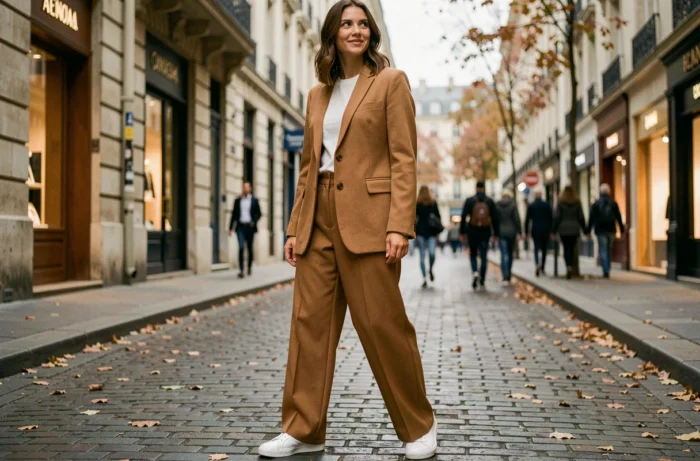
The autumn-winter 2026 silhouettes are based on a play of contrasts between structured volumes and fluid materials. Smooth leather, suede, lace, and silk share the wardrobes, while the palette swings between saturated red, natural tones, and off-white. We also observe a regulatory turning point that modifies the selection criteria for a sustainable wardrobe.
Textile Regulation 2026: What Changes for Creating a Sustainable Style
Law No. 2026-602 of July 8, 2026, regulates ultra-fast fashion in France. From September 1, 2026, eco-contributions will be adjusted for the affected products. Restrictions on advertising and promotion by influencers will come into effect on January 1, 2027.
On the European side, Article 25 of the ESPR regulation has prohibited large companies from destroying their unsold clothing, accessories, and shoes since July 19, 2026. This framework pushes the market towards resale, repair, and reuse.
Favoring repairable pieces designed to last is no longer a militant choice; it is an anticipation of the legal framework. Environmental labeling for textiles will enter a mandatory phase in France for certain communications starting October 1, 2026. Specifically, we recommend checking traceability and composition before any seasonal purchase.
By browsing the fashion section of Belle et Bien, one can see how these sustainability criteria are now integrated into current style choices.
Key Materials for Autumn-Winter: Leather, Suede, and Lace in the Same Silhouette
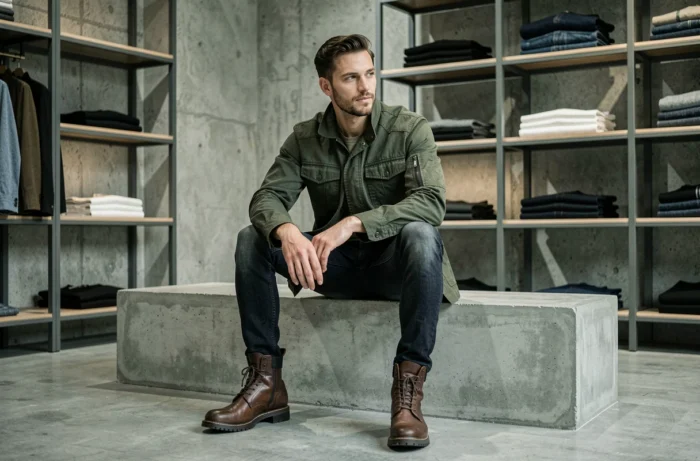
The trio of smooth leather, suede, and lace dominates this season. Their common point: a capacity to structure or reveal the silhouette depending on their placement in the outfit. We are not talking about wearing all three materials simultaneously but understanding how each alters the perception of a look.
Smooth Leather and Suede: Playing with Finishes
Smooth leather adds rigidity and a clean drape. Used in jackets or pants, it cuts the silhouette into geometric blocks. Suede, being softer, softens the lines and absorbs light instead of reflecting it.
Pairing smooth leather on top and suede on the bottom creates a contrast of textures that avoids chromatic monotony when sticking to similar shades (brown, khaki, olive). A straight suede pant worn with a fitted smooth leather jacket gives a more polished look than a uniform total leather outfit.
Lace: A Technical Piece, Not an Ornament
Lace returns in more architecturally constructed forms. It can be found as inserts on high-collared blouses or as side panels on midi dresses. Lace works better in contrast with an opaque material than in a total look, which quickly tips into costume territory.
On a long-sleeved silk blouse, a tone-on-tone lace yoke adds depth without overwhelming. The trick is to limit lace to a single area of the outfit.
Red and Off-White Palette: Combinations That Work This Season
Saturated red is omnipresent on the autumn-winter 2026 runways. Worn as a standalone piece (a dress, a coat), it immediately structures the look. However, multiplying touches of red dilutes the impact.
Off-white plays the opposite role: it lightens winter layers and prevents dark outfits from appearing too compact. We recommend using it as a base (a turtleneck sweater, wide pants) rather than as an accessory.
- Red as a statement piece (coat or dress) paired with neutrals (black, gray, beige) for a bold contrast without excess.
- Off-white in thick knit under a structured jacket to create controlled volume at the bust.
- A touch of red silk (scarf, visible lining) on an entirely neutral outfit, for those who prefer suggestion over assertion.

Cuts and Volumes: Wide Pants, Midi Skirt, and the Return of the Structured Shoulder
Wide pleated pants remain the most versatile cut of the season. They work well with both heeled ankle boots and flat derbies, and they accommodate variations in body shape without losing their line.
The midi skirt, cut below the knee, returns in stiffer versions (gabardine, fine leather) that hold the silhouette upright. We move away from the fluid pleated skirt of previous seasons towards a more sculptural drape.
The structured shoulder reappears on jackets and coats, not in the form of oversized shoulder pads but through elevated armholes and seams shifted outward. The result gives a sharp silhouette without exaggeration.
How to Balance a Voluminous Bottom
A wide pant or voluminous skirt requires a fitted top to avoid the “everything floats” effect. A fitted turtleneck in fine knit, tucked into the waistband, is enough to create a visual anchor. The relationship between a volume and a fitted counterpoint remains the basic principle of a controlled look.
- Wide pleated pants + fitted ribbed knit top + open structured jacket: three layers, two distinct volumes.
- Stiff midi skirt + tucked fluid silk blouse + thin belt: the belt defines the waist and separates the two material registers.
- Structured shoulder coat + straight dress underneath: the coat provides structure, the dress adds no unnecessary volume.
This season’s style is built on precise choices of materials and cuts rather than on the accumulation of trendy pieces. An effective autumn-winter wardrobe consists of a few well-cut elements, with a clear understanding of layering logic. With the tightening regulatory framework on ephemeral textiles, investing in durable and repairable pieces is also the most coherent strategy in the medium term.